Here's what nobody warns you about when your IUD comes out
The hormonal IUD floods your system with a steady, low dose of progestin. For years, that hormone sits there, quietly dampening your clitoral sensitivity. Then you remove it, and something strange happens. Your clitoris wakes up. Sometimes violently.
Touching yourself feels different. Stronger. Sometimes too strong. Sometimes weirdly numb one day and hypersensitive the next. Your partner notices. You notice. And most people just assume something broke, when really it's just your nervous system recalibrating.
I see this constantly in my practice. The transition period after IUD removal is real, it's temporary, and it's completely manageable with the right approach.
What the hormonal IUD actually does to sensation
Progestin works systemically. It doesn't just manage your uterus and prevent pregnancy. It travels through your bloodstream and affects nerve sensitivity throughout your pelvic region, including the clitoris. The hormone dampens arousal pathways, slows blood flow to genital tissue, and raises the threshold for sensation.
Think of it like turning down the volume on your nervous system. For years, your clitoris is operating at, say, six out of ten. Touch feels pleasant, but muted. Orgasms are achievable but often require consistent, firm pressure.
Then the IUD comes out. Within 48 to 72 hours, that hormone starts leaving your system. Within two weeks, it's mostly gone. Your clitoral nerves suddenly start firing on a volume that feels foreign.
The sensitivity rebound
What happens next varies wildly from person to person. Some people experience immediate hypersensitivity. Light touch feels almost unbearable. The kind of pressure that felt perfect before the removal now feels too intense.
Others feel numb or disconnected for the first few days, then gradually wake up. A third group swings between both states in the same week.
This isn't dysfunction. This is your clitoris literally recalibrating its nerve response. The tissue hasn't changed. The nerves are just operating without a hormonal mute button for the first time in years.
Why air-suction patterns help during the adjustment
Lemon clitoral vibrators, specifically those using air-suction technology, have a unique advantage during this period. The sensation is gentler on hypersensitive tissue because it distributes pressure across a wider area rather than concentrating vibration in a single point.
When your clitoris is oversensitive, traditional vibration can feel sharp or overwhelming. The pressure from air-suction technology feels more like a rhythmic pulse, a gentle draw rather than a buzz.
Start with the lowest pattern. Most Lem vibrator devices have 8 intensity levels. During the first two weeks post-removal, stay on patterns one through three. Your job isn't to reach orgasm fast. Your job is to help your nervous system relearn what sensation feels like without a hormonal suppressant.
The timeline for nerve recalibration
Here's what I tell patients to expect.
Weeks one through two: hypersensitivity and potential soreness. Stick to very low stimulation. Five to ten minutes is enough. If you feel pressure or mild pain, stop.
Weeks three through four: sensitivity usually stabilizes. You'll notice you can tolerate slightly higher patterns. This is when many people say "oh, I feel like myself again," but that's not quite accurate. You're feeling yourself without hormonal dampening. It's new territory.
Weeks five through eight: your nerve endings and blood flow patterns continue normalizing. This is often when pleasure actually deepens because sensation is clearer, but you're no longer overwhelmed by it.
Month three onward: most people report that sensation has stabilized at a new baseline. Often that baseline is more acute and responsive than it was on the IUD, which many people describe as a positive shift.
How to use lemon vibrators safely during adjustment
Four principles matter here.
First, lubricate. Even if you didn't need extra lubrication on the IUD, use water-based lube during this transition. Your tissue is more sensitive, and lubrication reduces friction without reducing sensation.
Second, start low and only increase if something feels genuinely good, not because you're pushing toward an outcome. The goal the first month is exploration, not achievement. If pattern three feels okay, try pattern four next time. If pattern three still feels too much, stay there.
Third, warm up longer than you think you need to. Ten minutes of very gentle stimulation on patterns one and two before moving anywhere else. This gives your nervous system time to settle into the sensation rather than shock it.
Fourth, pay attention to the difference between "this feels intense" and "this feels painful." Intensity can be pleasurable. Pain is not. If you feel sharp, shooting pain rather than strong sensation, you've gone too far.
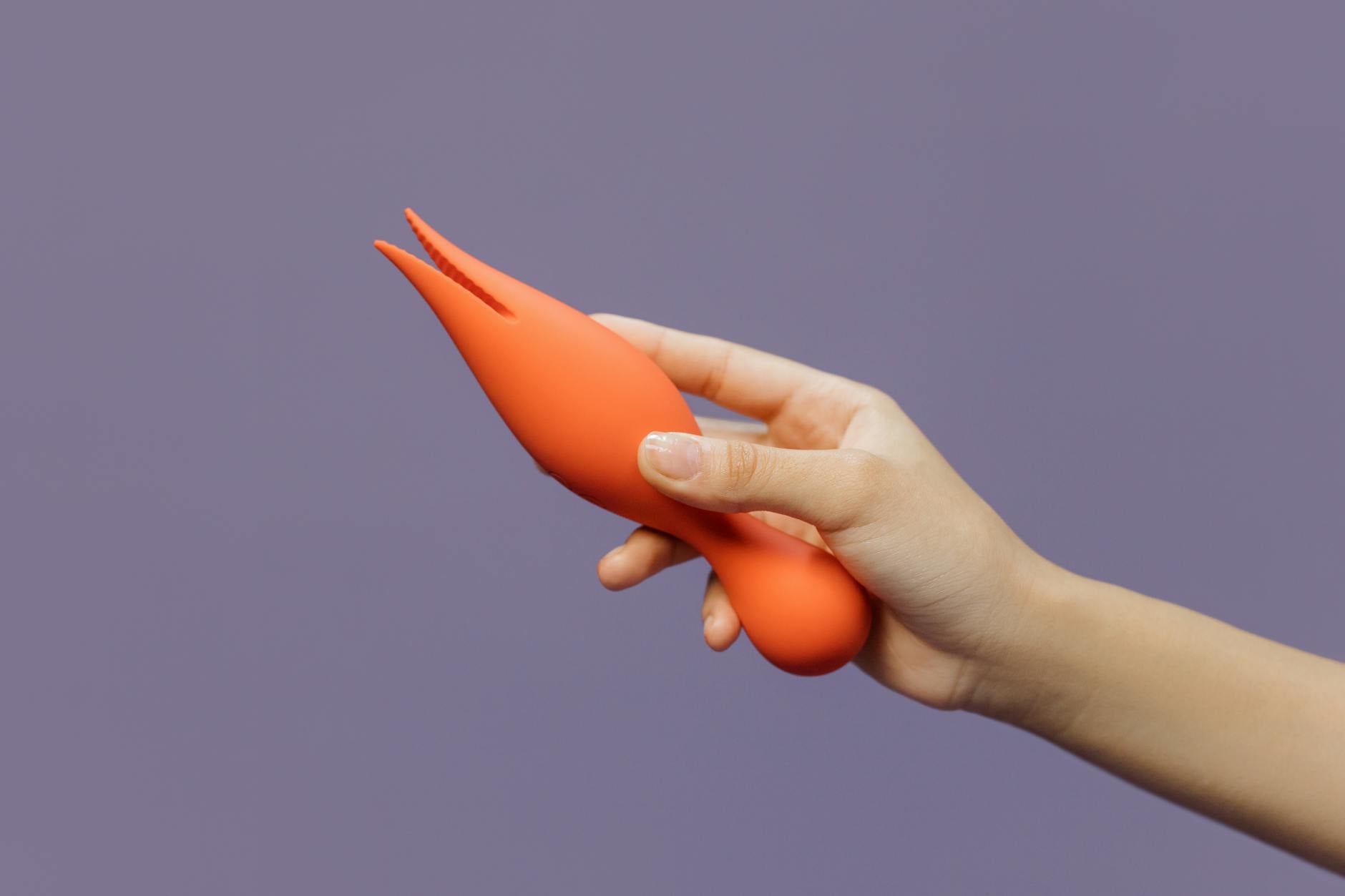
Photo by cottonbro studio on Pexels
What partners need to know
If you're navigating this with someone, communication matters more than technique. Your partner might interpret a shift in sensitivity as a shift in desire. It's not. It's physiology.
Here's what I suggest: "My body is recalibrating after the IUD removal. I'm going to need lighter touch for a few weeks, then we'll rebuild from there." That's it. That's the conversation.
Many partners worry they're doing something wrong because what worked before doesn't work now. Reassure them. This is temporary, expected, and actually an opportunity to slow down and explore things you might have been rushing through.
Some couples use this period to introduce a lemon clitoral vibrator together, which shifts the focus away from penis-in-vagina sex and toward exploration. That takes pressure off performance and gives both of you permission to go slowly.
When sensitivity doesn't level out
Most people feel substantially better by week four. If you're still experiencing pain, numbness that doesn't improve, or hypersensitivity that hasn't settled after six weeks, see a gynecologist or pelvic floor physical therapist.
Persistent hypersensitivity can sometimes indicate nerve irritation from the IUD insertion site. Persistent numbness might mean the IUD was pressing on a nerve, and it needs time to recover. A professional can assess and guide you.
Don't assume you need to wait it out. Three months is the reasonable window. Beyond that, expert input helps.
The upside nobody mentions
I won't dress this up with false optimism, but there is something genuinely good that happens for many people post-removal. When the hormonal fog lifts, pleasure often becomes more nuanced. You feel more, yes, but you also feel more selectively. You learn faster what you actually want versus what you thought you should want.
Many people say their best orgasms come after the adjustment period. The sensitivity rebound, once it settles, often reveals a baseline of pleasure that was muted the whole time they were on the IUD.
Use the adjustment period as information gathering, not as a problem to fix. Let lemon vibrators help you explore what your clitoris actually prefers without a pharmaceutical filter.
FAQ: Sensitivity and Pleasure After Hormonal IUD Removal
How long does hypersensitivity last after IUD removal?
Most people experience peak hypersensitivity in the first two weeks. By week three or four, sensitivity usually stabilizes at a new, higher baseline. Full adjustment typically takes six to eight weeks. If hypersensitivity persists beyond eight weeks or intensifies, consult a gynecologist.
Can I use my regular vibrator right after IUD removal?
Depends on what you consider regular. If you were using a high-intensity pattern before removal, that same pattern will likely feel too strong immediately post-removal. Start with patterns one through three on your device. Lemon vibrators with air-suction technology are gentler on newly sensitive tissue than traditional vibrators because pressure is distributed more gradually rather than concentrated.
Is it normal to feel completely numb after IUD removal?
Some people experience numbness for the first few days, then sensation returns. This is usually temporary and related to inflammation or swelling from removal. However, if numbness persists beyond two weeks or is accompanied by pain, see a healthcare provider. Rarely, an IUD can press on a nerve, and numbness might indicate irritation that needs professional assessment.
When can I have partnered sex after IUD removal?
Physically, most healthcare providers clear you for penetrative sex after a few days, assuming you're not bleeding heavily or in pain. Sensation-wise, you might find that what felt good before the removal now feels too intense or uncomfortable. Take things slower than usual. Communicate. This adjustment is temporary, and slowing down gives your nervous system time to recalibrate without pain.
Will my sensitivity eventually return to normal, or is it permanently changed?
Your baseline will likely be permanently more sensitive than it was on the hormonal IUD, and that's not a bad thing. You're returning to your body's baseline sensitivity without a hormonal suppressant. Many people describe this as a positive shift. Within two to three months, you'll have a stable new baseline and will know what feels good on this side of removal.
Can I use lemon vibrators solo while my sensitivity is adjusting?
Absolutely. Solo exploration during the adjustment period is actually ideal because you control the pace completely and don't have pressure to perform or reach a specific outcome. Start with patterns one and two, use lubrication, and focus on sensation rather than orgasm. This helps your nervous system integrate the changes without performance anxiety.
What happens next
Your clitoris spent years under a hormonal mute. Now it's listening to itself again. That's uncomfortable sometimes. But it's also the beginning of something that, for most people, turns out to be better. Clearer. More responsive. More yours.
Give yourself grace during the adjustment. Use lemon vibrators as tools for exploration, not achievement. If you're with a partner, communicate. And if something doesn't feel right after six weeks, trust that instinct and call your doctor.
You deserve pleasure that feels good in your body, not just in theory. That takes time to rebuild after hormonal changes. But it's worth it.
If you have questions about what you're experiencing or want to talk through your transition, reach out to us. We're here.
Sources
Graziottin, A., & Serafini, A. (2009). HPV Transmission and Recurrence in Menopause. Climacteric, 12(S1), 313
McKay, D. R. (2005). The Impact of the Levonorgestrel-Releasing Intrauterine System on Female Sexual Function and Genital Sensation. Current Medical Research and Opinion, 21(4), 491-499
Brodie, R., & Bergström, L. (2008). Removal of Long-Acting Reversible Contraception: Fertility, Sexual Function, and Patient Satisfaction. Human Reproduction Review, 14(2), 107-121
Joint Consensus Statement on Intrauterine Contraceptive Devices (2021). American College of Obstetricians and Gynecologists