Let's start with what actually happens
Performance anxiety isn't a libido problem. It's a nervous system problem. When your partner's brain is spinning through "Am I lasting long enough?" or "Is this good enough?" their body can't actually feel what's happening. The disconnect between mind and body becomes the biggest obstacle in the room. And honestly, lemon vibrators are one of the smartest tools for breaking that cycle.
Here's why. When anxiety is running the show, pressure lands on one person to "deliver" pleasure. That weight is suffocating for the anxious partner and isolating for you. A lemon clitoral vibrator redistributes focus. It takes the pressure off penetration or a single technique and creates a shared experience where both of you are participating in building pleasure.
Why lemon vibrators specifically help with anxiety
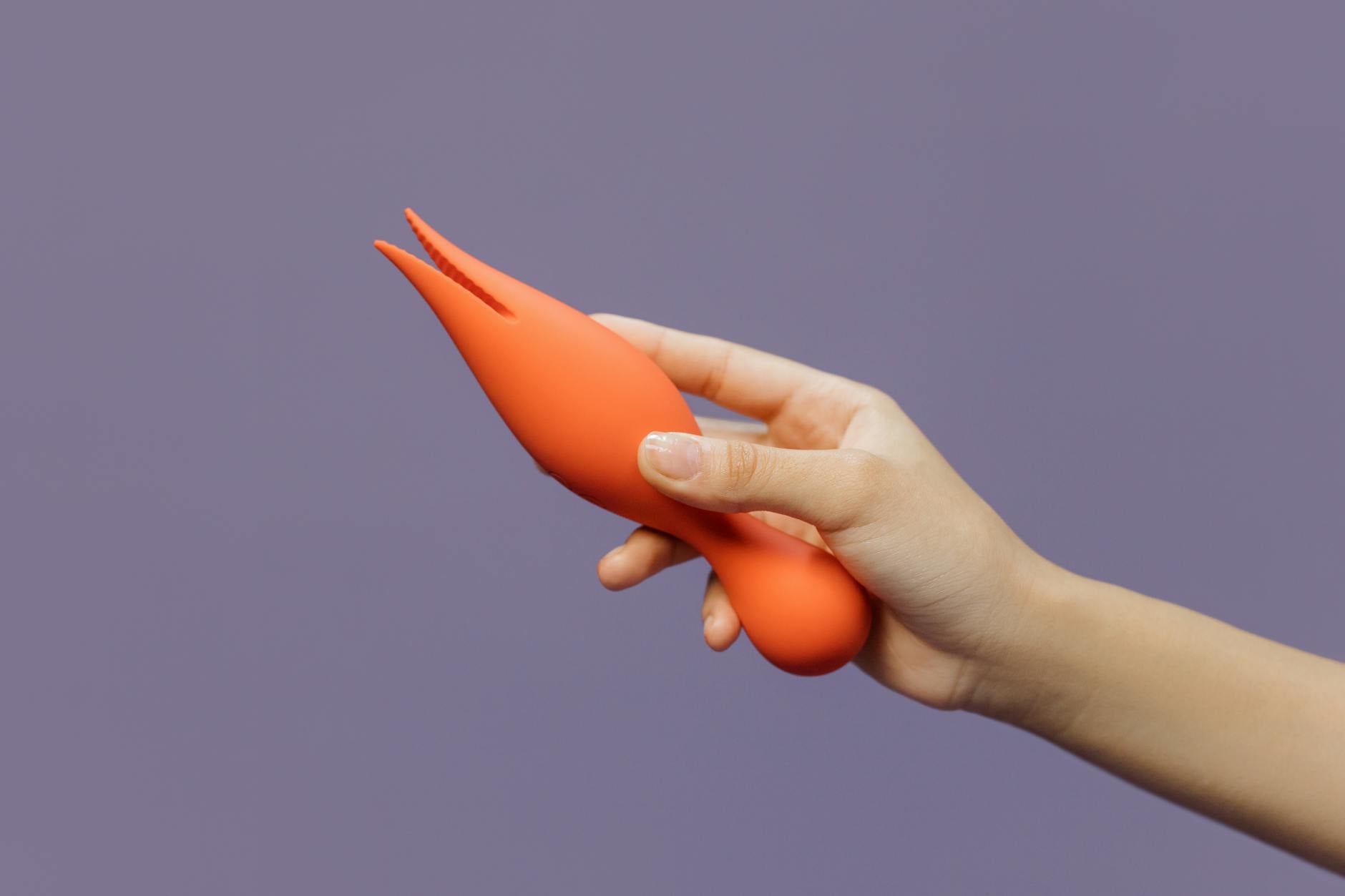
The design of lemon sexual toys matters here. Unlike traditional vibrators that require constant positioning or pressure, the suction-based sensation of a lemon vibrator creates a different kind of stimulation. It's gentler, more forgiving, and oddly enough, easier to relax into. That matters when anxiety is keeping muscles tight and arousal shallow.
There's also a practical shift. When you introduce a lemon clitoral vibrator into partnered sex, neither of you is performing for the other anymore. You're both working with a tool. That psychological permission to step out of the "performer" role is huge.
The other thing I've noticed with clients is that lemon vibrators feel less intimidating to anxious partners than traditional vibrators. The shape is playful. The sensation is different enough that it doesn't feel like a direct comparison to their own touch. It's an addition, not a replacement.
The conversation that needs to happen first
Before the vibrator comes out, there needs to be a real talk. And I mean real. Not "I want to try something in bed" but actual vulnerability.
Try saying something like: "I've noticed tension in us around sex, and I want that to change. I care about you and about us feeling connected. I found something that might help take pressure off both of us. Can we try it together?"
Notice what's NOT in that sentence. It's not "You have a problem." It's not "This will fix you." It's collaborative. It names the dynamic you've both been feeling.
Your partner's anxiety didn't arrive by himself. Something in the sexual dynamic between you fed it. Maybe past criticism. Maybe expectations that felt impossible. Maybe just comparison and self-doubt. The conversation acknowledges that you're both in this and you're both working to fix it.
If he shuts down or says no, don't push. Instead, ask what would help him feel safer. Maybe he needs to know more about how it works. Maybe he needs time. Respect that. Trust is what heals performance anxiety, not tools.
How to actually use them together
Here's a structure that works:
Start with him touching you. Not rushing into the vibrator. Just hands, proximity, reconnection. Let him remember that his touch matters. This is crucial. Performance anxiety gets worse when a partner feels replaced. By starting with his hands, you're sending the message that he's still the center of this.
Introduce the lemon vibrator as a team move. Say something like "Help me use this" or "Try it on me and tell me what happens." You're not disappearing into sensation alone. He's participating in the experience. He's watching your response, feeling your body shift, discovering something about what you like. That's intimacy.
Keep him involved in the process. He can hold it. He can adjust the pattern. He can ask you how it feels. This removes the pressure from "Will I be enough?" and replaces it with "We're exploring this together." That's a completely different conversation.
Notice if his anxiety drops. Once a lemon vibrator is creating sensation, watch for his body language to soften. Shoulders drop. Breathing slows. The hypervigilance eases. When he sees that you're enjoying something and he had a part in that, something shifts.
Reframing what "good sex" means
Performance anxiety thrives in a framework where sex has a goal, a timeline, and a winner. It's goal-focused, not pleasure-focused. A lemon clitoral vibrator fundamentally breaks that frame because it's not about "finishing." It's about sensation, about play, about presence.
If your partner has been holding himself to an impossible standard (lasting a certain amount of time, giving you an orgasm through penetration alone, performing flawlessly), using a lemon sexual toy together is permission to dump that standard.
Sex stops being a test he's either passing or failing. It becomes an experience you're having together. That's the antidote to performance anxiety.
One more thing: talking about what felt good afterward matters. Not in a clinical way. Just "I loved this" or "That felt amazing when you..." Positive feedback is gold for anxious nervous systems. It's the opposite of the self-critical loop that anxiety feeds.
When to bring in professional help
If performance anxiety has been severe or long-standing, a sex therapist or couples therapist is worth it. Not because the vibrator won't help, but because there may be deeper stuff underneath. Past trauma. Relationship patterns. Shame. A professional can help untangle that while you're also building new patterns with tools like lemon vibrators.
If his anxiety is tied to erectile function specifically, that's also a conversation to have with a doctor or therapist. There's sometimes a medical piece, and there's always an emotional piece.
But here's the good news: introducing a lemon vibrator and having this conversation can actually accelerate healing. It shows him that you're not mad, you're not leaving, you're not disappointed. You're staying and building something different together.
The patience piece
Anxiety doesn't disappear after one use. This is a process. The first time might feel weird. The second time might feel better. By the third or fourth time, his nervous system might finally relax enough to actually feel pleasure. That's not a failure. That's the nervous system learning that this is safe.
Some partners surprise you. They relax immediately and connection floods back. Others need months. Your job isn't to speed that up. Your job is to show up consistently, to keep talking, and to not shame him for struggling.
The fact that you're researching this, that you're looking for solutions, that you care enough to try something new. That's already sending him the message that you're not going anywhere. Sometimes that message alone is the biggest gift you can give.
FAQ: Performance anxiety and lemon vibrators
Will using a lemon vibrator make my partner feel replaced or inadequate?
Not if you frame it right. The key is involving him, not sidelining him. Invite him to hold it, to watch, to participate. Make it clear that it's something you're doing together, not something that's replacing him. His involvement and his pleasure matter just as much as yours.
How do I know if my partner is ready to try this?
You don't, until you ask. Have the conversation first. Explain why you think it might help both of you relax. Listen to his concerns without judgment. If he says no, respect that and don't bring it up again immediately. Trust builds slowly.
Can we use a lemon vibrator during penetration?
Absolutely. That's actually where a lot of couples find the most relief because it takes the pressure off penetration to be everything. The vibrator creates additional sensation, you get what you need, and he gets to focus on connection rather than performance metrics. It's a win for both of you.
What if we try it and his anxiety gets worse?
Stop. Take it off the table for now. Ask him what felt unsafe. It might be too much stimulation. It might be feeling judged. It might be something totally unrelated that got triggered. The vibrator isn't a magic fix if there's deeper stuff happening. That's when couples therapy becomes the real tool.
How long until we see improvement?
That depends on how deep the anxiety goes. Some couples feel relief within a few sessions of trying this together. Others need months of consistent communication and exploration. The important thing is that you're both trying. That effort itself is healing.
Is it normal that my partner wants to use it on himself sometimes?
Completely normal. Anxiety can make partnered sex feel stressful, so solo exploration might feel safer first. Let him have that space. He's learning about his own body and what helps him relax. That information will eventually make partnered sex better too.
The real shift
Performance anxiety wins when you're both isolated. It wins when you're not talking, when shame is present, when pleasure becomes a test. A lemon vibrator doesn't fix anxiety by itself. But combined with real conversation, patience, and genuine collaboration, it can help you both step out of the performance trap and back into actual connection. That's where healing starts.