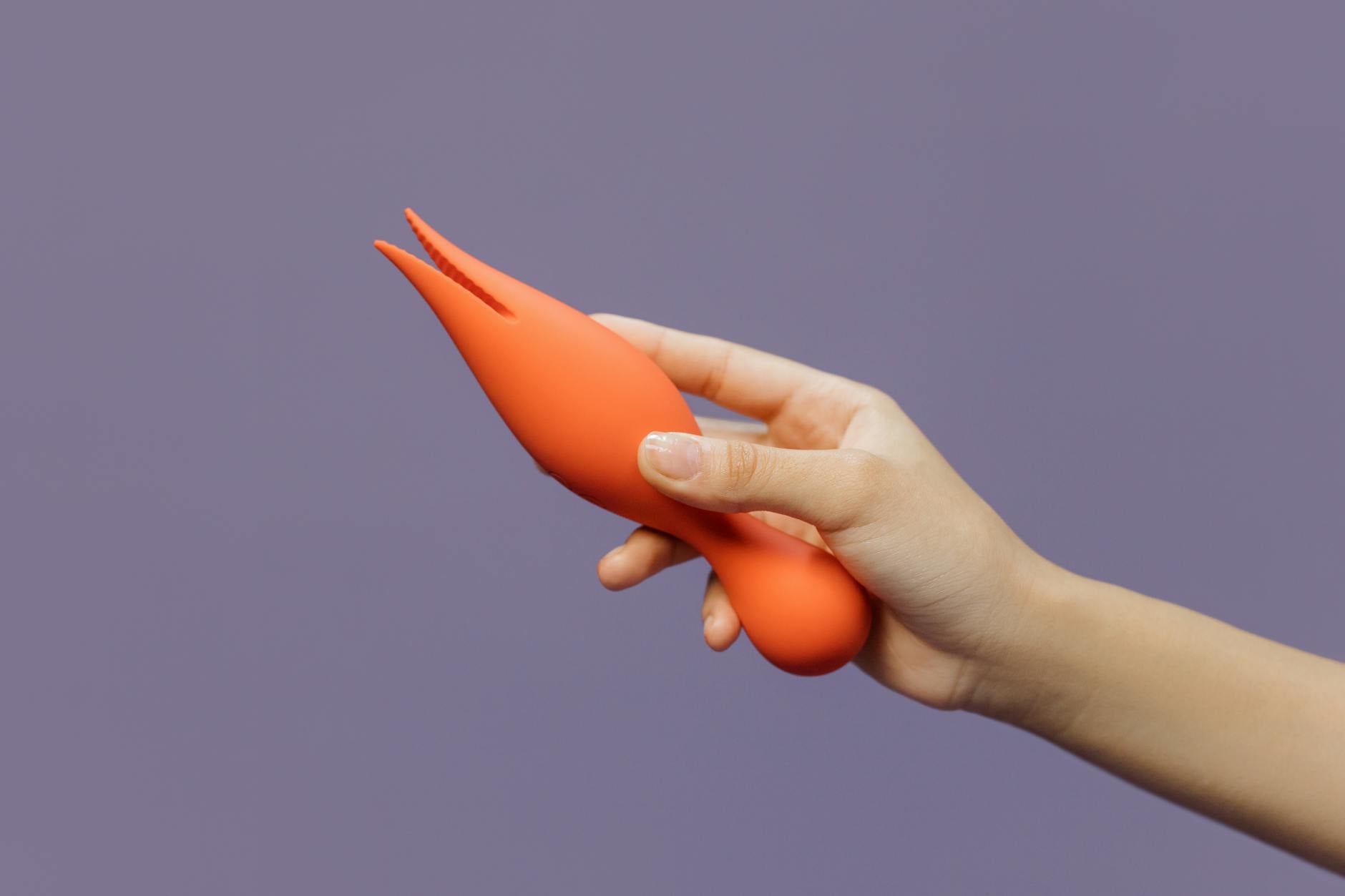
Let's start where most couples get stuck
You want to introduce a lemon clitoral vibrator. Your partner gets quiet, changes the subject, or says "I don't know, feels weird." You try explaining why you want it. They hear criticism. The conversation dies. Two weeks later, neither of you has brought it up again.
This is where communication breaks down, and it's weirdly common. The thing is, sometimes the problem isn't the vibrator itself. It's that the actual conversation you're trying to have ("I need pleasure to matter in our sex life" or "I want to explore this together") feels too vulnerable to say out loud.
Why this particular conversation feels different
Talking about pleasure is not like talking about whose turn it is to load the dishwasher. Pleasure touches something deeper. For the person resisting a vibrator, it might feel like a threat ("Am I not enough?"), a critique ("You're saying I'm bad at this"), or a sign that things are broken ("If we need a toy, our sex life is failing"). These feelings are usually not about the vibrator at all.
For the person wanting the vibrator, there's vulnerability too. Asking for what you want requires admitting that something is missing. That takes trust, especially if you've been silenced before.
Meanwhile, the vibrator sits in a drawer, and what was supposed to be exciting becomes a symbol of failure.
The conversation nobody's having
Here's what couples usually skip: "What are you actually afraid of?"
I've worked with hundreds of pairs, and the resistance almost never comes from genuine disgust with sex toys. It comes from fear. Maybe they're worried that introducing pleasure tools means you'll prefer them to your partner. Maybe they think wanting vibration is a sign you're unsatisfied with them. Maybe they grew up thinking pleasure was something to hide, and now it's being brought into the light.
The vibrator is not the problem. The unspoken fear is.
Before you even touch a lemon vibrator, you need to know what your partner is actually scared of. Not by pushing. By asking. And then by listening without defending yourself.
Try this instead of "I want to try a vibrator": "I've been thinking about ways to feel more pleasure in our sex life, and I'm nervous about bringing this up because I don't want you to think I'm unhappy with you. But I need to tell you what I'm thinking. Can we talk about it?"
Notice what changed. You named the vulnerability. You made space for their fears before they had to guess them. You gave them permission to tell you the truth.
What happens when you skip the conversation and use the vibrator anyway
Some couples try to sidestep the whole thing. They introduce a lemon adult toy without really discussing it, hoping action will solve what words wouldn't. This usually backfires.
The partner who wasn't ready feels blindsided or excluded. The partner who wanted the vibrator feels they have to choose between their pleasure and their partner's comfort. Sex becomes tense. The vibrator becomes a symbol of disconnection instead of connection.
I've seen couples put toys away for years after one bad introduction that went untalked-about. Not because the toy itself was the problem, but because it revealed that they couldn't talk to each other about what they wanted.
The vibrator didn't break the connection. The lack of conversation broke it.
Three stages of rebuilding through touch
Once you've named the fear, you can actually move forward. Here's how I recommend using a lem vibrator when you're in repair mode.
Stage One: Exploration without pressure
Start by letting your partner explore the vibrator on themselves, alone, with no expectation of using it together. This removes the performance pressure. A lemon clitoral vibrator feels different than fingers or a partner's touch. The suction sensation is novel. Some people find it instantly pleasurable. Others need time to understand what their body is feeling.
Give them space to experiment without narrating it or expecting a report. This is about curiosity, not conquest. The goal is not an orgasm or even enjoyment right now. The goal is neutral exposure.
Many people soften toward something once they've experienced it alone, without an audience or expectations.
Stage Two: Watching becomes permission
When both of you are ready (and this might take weeks), one partner uses the lemon sucker while the other watches. Not to judge or perform, just to be present.
This is radical for couples who've stopped really looking at each other during sex. It's intimate in a different way than intercourse. You're witnessing your partner's actual pleasure, not the performance of it. You're seeing their real face, their real breathing, their real responses.
The partner using the vibrator often reports feeling genuinely seen for the first time in years. The watching partner often realizes their fear was based on imagination, not reality. Seeing their partner light up with a lem vibrator in hand is usually when the shift happens.
Stage Three: Integration
Once both of you have moved past fear, the clitoral vibrator becomes one option among many. It's not the main event. It's not a substitute for your partner. It's a tool that sometimes makes sex feel better for the person using it.
The magic part: once couples get here, they often find that using a lemon vibrator together actually deepens their connection. Why? Because they finally had the conversation. They named the fears. They moved through them together. Now the vibrator is a symbol of that work, not a symbol of what was broken.
What to actually say if your partner is still hesitant
Sometimes one person gets it and the other still doesn't. You've had the conversation. You've explained why you want this. And your partner still seems resistant or unconvinced.
At this point, you have two real options. Option one is patience. Real change in how people feel about their bodies and pleasure can take months. Your partner might need more time, and pushing will only deepen resistance.
Option two is honesty. "I need my pleasure to matter in our sex life together. I'm not asking you to use the vibrator. I'm asking you to support me using it." This is different from asking permission. You're not asking for approval. You're telling them what you need and asking if they can be on board.
Some partners can hear this. Some can't. If they truly can't, that's real information about your relationship, and it's worth sitting with that separately from the vibrator itself.
When the vibrator becomes a bridge
For many couples, once communication opens up, the lemon clitoral vibrator stops being a threat and becomes something else entirely. A sign that you're both willing to stay curious about each other. A reminder that pleasure doesn't have to look a certain way. Proof that you can talk about hard things and come out closer on the other side.
I've had clients tell me that finally using a lem vibrator together was less about the orgasm and more about the conversation that made it possible. The vibrator was just the beginning.
Frequently asked questions
What if my partner sees the vibrator as a threat to our relationship?
That fear deserves respect, not dismissal. Ask them directly: "What are you worried will happen?" Listen without trying to fix it. Often they're afraid you'll prefer the vibrator to them, or that wanting it means you're unhappy. Address the actual fear, not the vibrator. You might say something like, "My body responds differently to different types of stimulation. That doesn't mean I want you less. It means I want to feel good, and I want to share that with you."
Can I use a lemon vibrator during partnered sex if they're still skeptical?
Not if you want to rebuild trust. Using it without explicit agreement, even if you've talked about it, will feel like a violation. The conversation has to lead to a mutual yes. If your partner isn't there yet, using it anyway is choosing the vibrator over the relationship moment. Wait. Keep talking. The right time will be clear when you both agree to it.
What if we have completely different attitudes about pleasure toys?
Then you have a values conversation that goes deeper than vibrators. Some people grew up thinking pleasure was shameful. Some grew up thinking it was celebrated. Those beliefs don't change overnight just because you explain why a lemon clitoral vibrator is good. You might need a couples therapist to help bridge that gap. There's no shame in that. Sometimes an outside person can hear things partners can't say to each other.
How do we move past the awkwardness after trying and it feeling weird?
Normalize it. "That felt strange" is totally fine. You don't have to pretend it was amazing. You can try again, try something else, or take a break. The pressure to make it work perfectly is exactly what kills these conversations. Permission to feel weird about it actually helps more than pretending it was great.
Is it possible to reconnect through a vibrator if we haven't had sex in a long time?
Possible, yes. But a vibrator won't fix a disconnection that runs deeper. If you haven't been intimate for months or years, that's usually a symptom of something else: resentment, exhaustion, loss of emotional connection, or unresolved conflict. Those need addressing first. Then a lemon vibrator can be part of the rebuilding, not the solution itself. Consider whether couples therapy might help you both get back to a place where you want to be close again.
What if only one of us wants to use the vibrator in our sex life?
That's fine. One person using a lemon clitoral vibrator during sex while the other doesn't is completely normal. The goal isn't symmetry. It's mutual support. Your partner doesn't have to want the same things you do. They just have to be okay with you wanting them.
The conversation is the real work
I won't tell you that introducing a lem vibrator will fix a broken conversation or resurrect a dead sex life. What I will tell you is that the willingness to have an awkward conversation about pleasure is what changes things. The vibrator is just the container for that conversation.
If your partner is willing to talk about what they're scared of, to listen to what you want, and to figure it out together, you're already doing the hard part. The vibrator is just a tool that arrives after you've both agreed to try.
Want to explore this further? Reach out to discuss how to navigate intimacy conversations in your relationship.
Sources
Gottman, J. M., & Silver, N. (2015). The Seven Principles for Making Marriage Work. Harmony.
Perel, E. (2018). Mating in Captivity: Unlocking Erotic Intelligence. Harper Perennial.
Tannen, D. (1990). You Just Don't Understand: Women and Men in Conversation. William Morrow.