Let's be real about flatlined desire
Desire disappearing is not the same as pleasure disappearing. That distinction is everything because they need different solutions, and confusing them leaves you stuck. When pleasure dims, you might still feel the spark somewhere. When desire flatlines, the spark isn't dimmed. It's absent. You don't want it, and you're not sure you want to want it again.
That's the place where a lot of people get stuck. Not because they've lost the capacity for pleasure, but because the motivation to access it has evaporated. Life, stress, relationships, health, medication, grief, burnout. The reasons are usually legit. The problem is real. And the path back is not obvious.
Why motivation and pleasure are wired differently
Your brain has two separate systems here. One generates desire (dopamine, novelty, anticipation). One generates pleasure (the actual sensation and reward). When desire flatlines, your pleasure system is often fine. It's just not getting activated because nothing is triggering it.
This is crucial because it means that waiting around for desire to spontaneously return usually doesn't work. Spontaneity requires desire. You're asking a system that's offline to switch itself back on. It doesn't work that way.
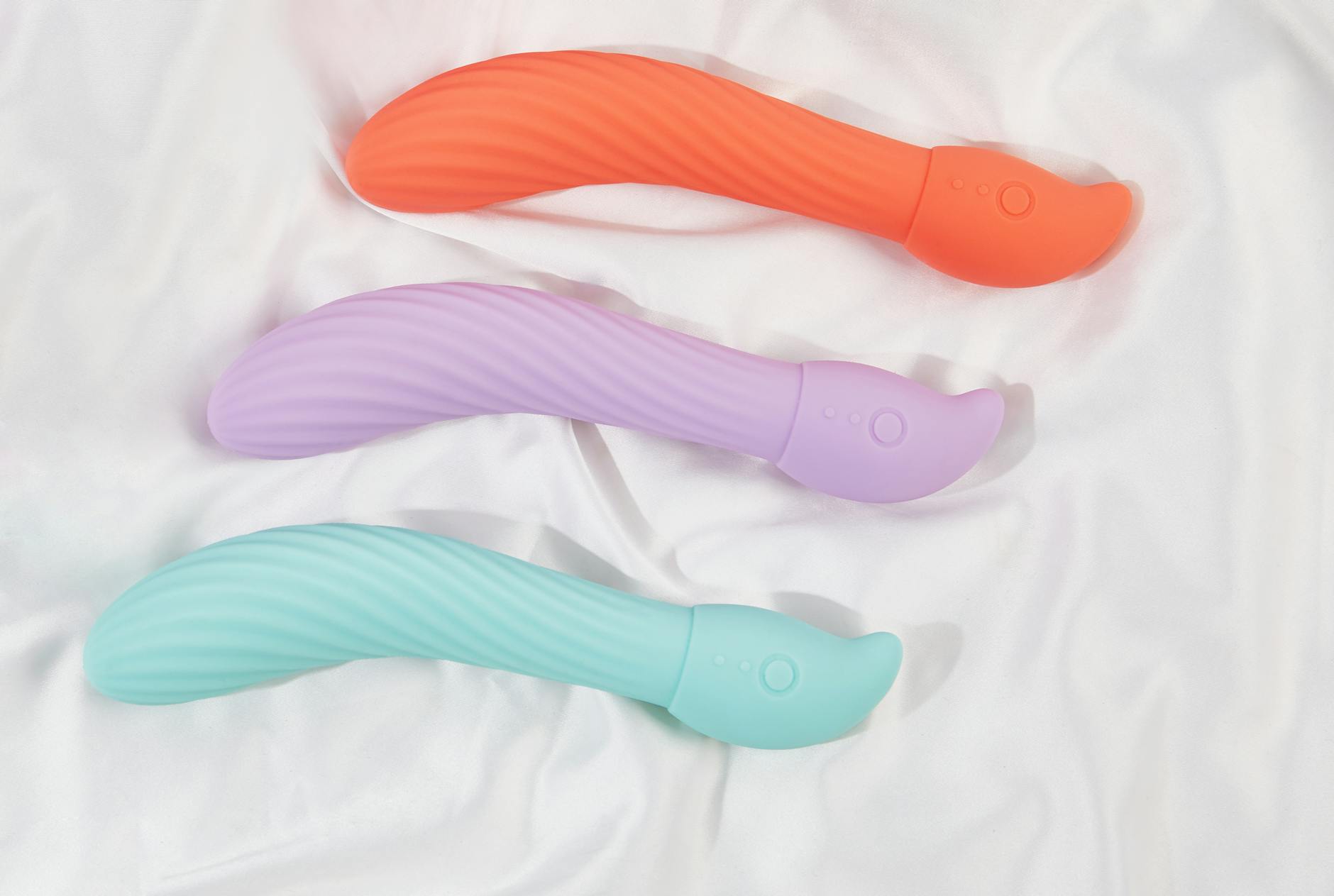
What does work is reintroducing gentle, low-pressure touch and letting your nervous system remember what pleasure feels like. Lemon vibrators, specifically the Lemon clitoral vibrator, are useful here because they sidestep the motivation gap. You don't need desire to enjoy the sensation. The sensation can come first. Desire often follows.
The three phases of flatlined desire
Before you start using a lemon vibrator, it helps to know which phase you're actually in. They respond to different approaches.
Phase one: Desire is off, but you're motivated to turn it back on. You feel the absence and want to fix it. You have incentive. This is the fastest phase to work through, usually 3-6 weeks of consistent gentle touch.
Phase two: Desire is off, and you're ambivalent. You'd like it back but you're not actively pursuing it. Life is busy. It feels low priority. You're not distressed, just.. flat. This phase usually needs a different strategy. Not willpower. Permission.
Phase three: Desire is off, and you're actively avoiding it. Sex feels like an obligation or a source of tension. The idea of pleasure feels like a chore. This one needs some honest reflection first before introducing any vibrator.
Most people cycle through all three at some point. The key is knowing which one you're in right now, because the entry point is different.
Rebuilding desire without forcing it
The mistake I see most often is people trying to manufacture desire by having sex anyway. "If we just start, I'll get into it." Sometimes that works. Often it creates a feedback loop where sex becomes associated with obligation, which tanks desire further. You're not restarting the engine. You're draining the battery.
A better approach: introduce sensation with zero expectation of desire or orgasm. That's where lemon vibrators come in. They're small, accessible, and they bypass the entire motivation question. You don't need to want it to enjoy the physical sensation.
Start with five to ten minutes, twice a week. Alone. No partner, no performance, no agenda. Just you and the vibration. Pay attention to what patterns feel good (this is where "how to find the right lemon vibrator pattern for your clitoris" becomes useful). Notice when sensation feels sharp versus dull. Notice what makes your nervous system settle versus ramp up.
This isn't meant to be erotic. It's meant to be informative. You're teaching your body that touch is possible again. That it feels okay. That it doesn't have to mean anything.
The permission part (this matters more than technique)
Honestly, the biggest blocker I see is not technical. It's permission. Somewhere along the way, desire became something you should fix, should manufacture, should want. That pressure is exactly what keeps it offline.
Flat desire often shows up in people who are extremely functional otherwise. You're managing career, kids, a relationship, health, finances. Pleasure feels frivolous. Wanting sex feels like a luxury you don't deserve or a distraction you can't afford.
That's backwards. Rebuilding desire is not a luxury. It's basic nervous system maintenance. And lemon vibrators are useful specifically because they're private, quick, and they don't require collaboration or coordination. You can do this alone, on your own timeline, without explaining yourself to anyone.
Use that privacy. Use that autonomy. Give yourself permission to explore without a goal. The desire often comes back when the pressure comes off.
When to involve your partner (and when not to)
If you're in a relationship, there's probably a conversation happening about this flatline. Your partner might be hurt. Confused. Worried. That's all valid, and it also cannot be your job to fix. That's the key boundary.
Your job: to explore your own pleasure in private first. To rebuild the relationship between your body and sensation. Your partner's job: to give you space to do that without pressure or commentary. Those are different conversations.
Once you've spent three to four weeks reintroducing solo touch with a lemon vibrator, and you're noticing some shift in sensation or interest, that's when you might involve your partner. But the entry point is not "let's have sex again." It's "I've been using a vibrator for solo play and it's helping. I'd like to show you something about what I've noticed."
That's collaboration without obligation. It's specific without being prescriptive. And it often opens up conversation that wouldn't happen otherwise.
The physical restart
Your clitoris is incredibly responsive to the right kind of stimulation. Lemon vibrators use air-pulse technology rather than direct vibration, which means they're gentler on tissues that have been dormant. They also feel fundamentally different from human touch, which can actually be helpful when you're rebuilding.
Start on the lowest pattern. The goal is not to reach orgasm. The goal is to spend time in sensation. Notice how different parts of your clitoris respond to different pressures. Some people find that the indirect contact of a lemon vibrator (it doesn't touch directly, it uses suction) is way less overwhelming than vibration, especially when desire is flat.
Use water-based lubricant even if you're not naturally lubricated. This isn't a sign something is wrong. Desire flatlines often come with low natural lubrication. The lube is just functional. It makes sensation clearer.
Budget 10-15 minutes. Set a timer. When the timer goes off, you're done. This removes the pressure to perform or achieve. It's just time allocated to sensation. That's enough.
What else usually has to shift
Here's what I've noticed: desire flatlines don't usually exist in isolation. Usually something else has shifted too. Stress. Sleep. How you feel about your body. How you feel about your partner. Whether you're taking antidepressants or hormonal contraception. Your baseline anxiety level.
Lemon vibrators can restart sensation. But they're not fixing the underlying piece. If your desire flatlined because you're burned out at work and you haven't slept properly in six months, the vibrator helps. But the sleep probably matters more.
Spend some time honestly assessing what shifted right before desire went flat. Stress? A change in medications? A relationship issue? A health change? That's not a distraction. That's essential information. The lemon vibrator reintroduces pleasure. The other stuff needs attention too.
When flat desire is worth mentioning to a doctor
If desire has been completely absent for more than three months, and nothing obvious changed in your life, that's worth checking in about. Low testosterone, thyroid issues, undiagnosed depression, and medication side effects all flatten desire. So does high cortisol and chronic stress.
A good conversation with your doctor is not "I don't want sex." It's "My desire baseline has changed noticeably and I'd like to explore whether there's a physical component." That usually opens up actual investigation instead of deflection.
Lemon vibrators help rebuild pleasure. But if there's an underlying physical reason desire flatlined, you want to know that.
The slow rebuild
Expect three to eight weeks before you notice meaningful shift in desire. Not because lemon vibrators are slow. Because desire is not a light switch. It's a system that got turned off for reasons, and it turns back on gradually once the conditions feel safer.
You're not trying to manufacture desire. You're trying to create an environment where desire can return. Private time. Low pressure. Consistent gentle sensation. Permission. That's it.
Most of my clients report that after about six weeks of solo play with a lemon vibrator, something shifts. Not always to"I want sex all the time." But to "I remembered why this feels good. I want more of this." That's the restart.
FAQ
What if I use a lemon vibrator and still feel nothing?
Then you're probably in phase three (avoiding or resistant). That's not a failure. That's information. It means the flatline might be connected to something that vibration alone won't fix. Could be relationship tension, body image, past trauma, medication, or just that you need more time. A conversation with a therapist might be more useful than a vibrator at that stage.
Can I use a lemon vibrator if I'm on antidepressants?
Yes. Antidepressants often flatten desire and sensation as side effects. Lemon vibrators can help compensate by providing stronger stimulation. If you're noticing desire flatline since starting medication, that's worth mentioning to your prescriber. Sometimes switching or adjusting dose helps. Sometimes the vibrator is the useful tool while you're on the medication.
Should I tell my partner I'm using a lemon vibrator?
That's up to you. If you're in a committed relationship, most people find that honesty helps. Not immediately, but once you've rebuilt some of your own pleasure. The conversation becomes easier if you're like "I've been exploring my body again" instead of keeping it secret. Secret often breeds resentment.
How often should I use a lemon vibrator when desire is flat?
Twice weekly for 10-15 minutes is a good starting point. Enough to rebuild the neural pathway. Not so much that it becomes obligatory or another task on your list. Consistency matters more than intensity.
Is it normal that I don't feel anything at first?
Completely. When desire is flat, sensation is often dulled too. That's temporary. Your nervous system is in a low-arousal state. It takes time to wake up. Stick with it for at least three weeks before deciding whether it's working.
What if I feel guilty using a lemon vibrator when my partner is around?
That's a separate conversation. Guilt usually means someone (maybe you, maybe someone else) has made pleasure feel shameful. You deserve solo pleasure without guilt. That's non-negotiable. If a partner is making you feel wrong for exploring your own body, that's a relationship issue worth addressing with a therapist.
The path forward
Flat desire is fixable. Not through willpower or more pressure. Through gentle, patient reintroduction of sensation and permission. A lemon vibrator is a useful tool in that process, but it's the consistency and the lack of expectation that actually creates change.
Start this week if you're ready. Alone. No agenda. Just 10 minutes and a lemon vibrator. Let your body remember what pleasure feels like. Desire often follows once safety is established. And if it doesn't after six weeks, that's when you bring in other support. But most of the time, it does. Your body hasn't forgotten how to want. It's just been waiting for permission to try again.
If you're working through this with a partner or need support navigating the relationship side of flatlined desire, we're here to help.