
Let's name the thing nobody says out loud
You're in bed. Your partner is there, or you're alone but thinking about how you'll perform when they are. And suddenly your brain becomes a sports announcer narrating your body like it's a live event. "Will she come? Can she do it fast enough? What if it takes too long? Is this taking too long?" The commentary is relentless. And arousal? Arousal exits the building.
Performance pressure during sex is the enemy of pleasure. Not your partner, not your body, not your desire. The pressure itself. And here's what's wild: most people think the solution is to try harder, last longer, come faster, or be sexier. The actual solution is the opposite. It's to step out of the performance mindset entirely.
How performance anxiety actually kills arousal
When you're in "perform" mode, your nervous system is in sympathetic activation. That's your fight-or-flight response. Blood moves away from your genitals and toward your muscles. Your clitoris gets less engorged. Lubrication dries up. The speed of arousal slows. Orgasm becomes harder to reach because you're literally working against your own physiology.
Then comes the spiral. You notice you're struggling. The struggle makes you more anxious. More anxiety makes it harder. And suddenly what started as "let me make this good" becomes "why can't I do this thing I've done a thousand times."
I see this pattern constantly in my practice, particularly with people who've had partners who've vocalized expectations ("You usually come so fast") or who've internalized cultural narratives about what "good sex" looks like. The pressure can come from a partner, but more often it comes from yourself.
Why clitoral vibrators break the performance cycle
A clitoral vibrator like the Lem does something psychologically powerful: it shifts you from "performing for someone else's timeline" to "receiving what feels good right now." That's a fundamental reset.
Here's why. When you're using a vibrator, you're not trying to convince your body to respond. You're not managing someone else's experience. You're not performing an orgasm. You're accessing one. The vibrator does the heavy lifting neurologically. Your job becomes purely sensory. Feel what's happening. Notice what increases pleasure. Adjust if you want to. That's it.
For clitoral vibrators specifically, air-suction technology like the Lem's is particularly helpful for this because it provides consistent, non-judgmental stimulation. There's no "am I doing this right" moment. The device isn't waiting for you to perform. It's just... working.
Reframing solo use as homework, not shame
Here's a conversation I have all the time: "I feel weird using a vibrator alone because then my partner will know I masturbate." Or "I feel like I should be able to come from partnered sex alone."
Let me flip this. Using a vibrator solo isn't cheating on your partner or failing at sex. It's research. You're learning your own body's pleasure map without an audience, without a timeline, without anyone's expectations but your own.
When you masturbate with a clitoral vibrator alone, you learn things that make partnered sex better. You learn exactly what pressure, pattern, and rhythm work for you. You learn how long it takes when you're relaxed. You learn what kills arousal and what builds it. Then you bring that knowledge into partnered sex.
That's not selfish. That's foundational.
How to use lemon vibrators when partnered sex feels like a performance
Three concrete adjustments:
First, solo use without a timeline. Set aside 20-30 minutes when you have zero pressure. No goal of orgasm. No checking the clock. Just exploration. Use your Lem vibrator on the gentlest settings first. Notice what happens. If you orgasm, great. If you don't, also fine. The point is to experience pleasure without stakes.
Second, communicate differently with a partner. Instead of "I have trouble coming," try "I'd like to use my vibrator during our time together so I can relax more." That's not a criticism of them. That's you creating conditions where pleasure is possible for you. A partner worth keeping will see that as hot, not threatening.
Third, build solo pleasure into your partnered routine. Some couples use vibrators during partnered sex. Some do solo sessions before partnered time so there's no pressure to come again. Some alternate nights. The framework doesn't matter. What matters is separating the pressure from the pleasure.
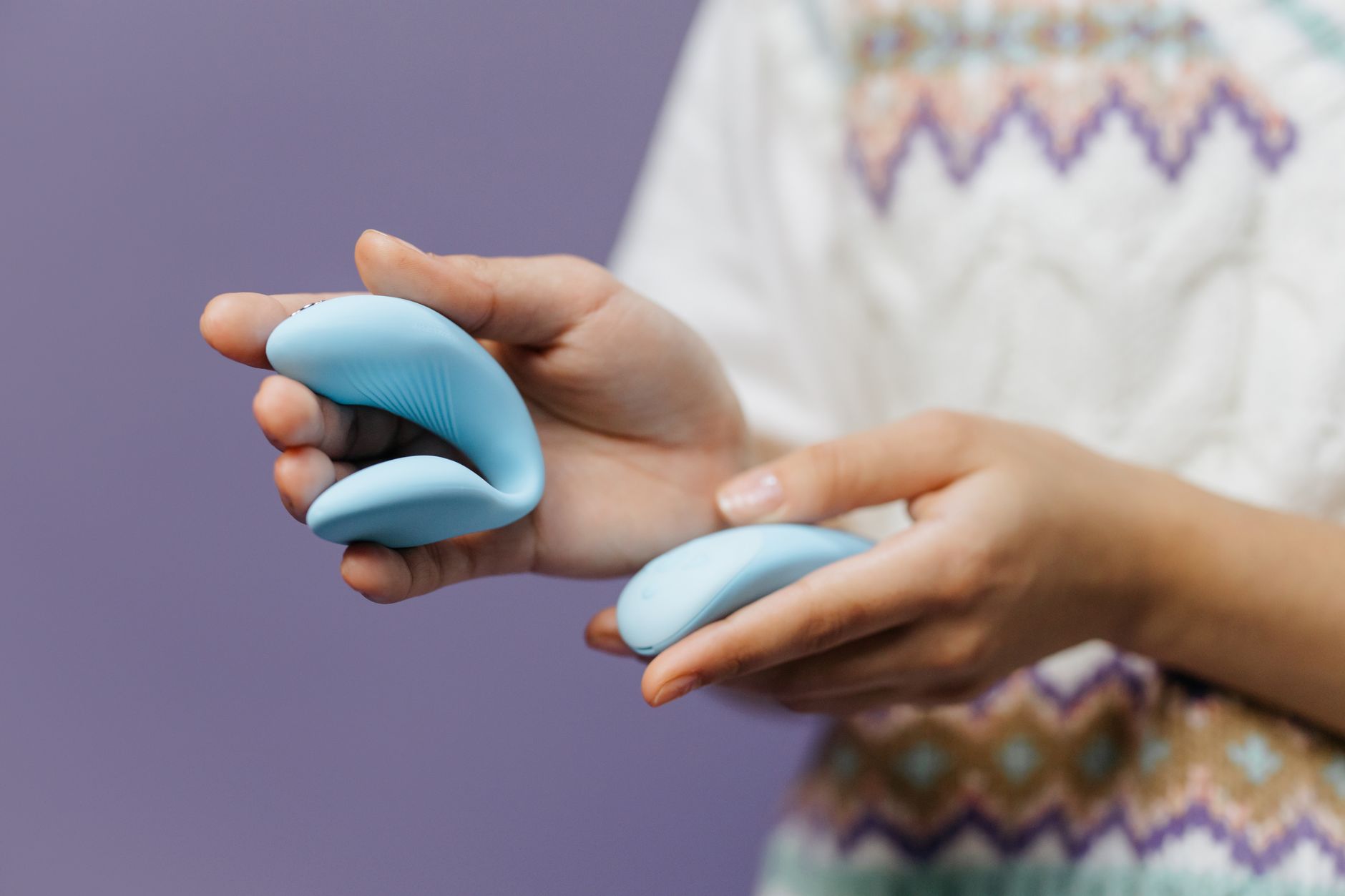
Photo by cottonbro studio on Pexels
The neuroscience of letting go
When you're not performing, something shifts in your prefrontal cortex. The part of your brain responsible for self-judgment quiets down. You move into a parasympathetic state. Rest and digest. Your body can finally do what it knows how to do.
This is why some people who struggle to orgasm during partnered sex find that they orgasm easily alone. It's not that their body is broken. It's that the conditions were wrong. Remove the audience, even an internal one, and the body knows exactly what to do.
Clitoral vibrators are tools for creating those conditions. They're not workarounds or admissions of failure. They're permission slips.
What happens when you stop performing
Once you've used a vibrator alone a few times without pressure, something interesting happens. You stop thinking about your performance during sex. You think about sensation. You stop wondering if you're taking too long. You wonder what pattern feels best. You stop managing your partner's experience. You start being present in your own.
That presence is where real pleasure lives. And ironically, partners almost always respond to it. Because presence is attractive. Relaxation is sexy. Someone who's actually experiencing pleasure, not narrating it, is magnetic.
If you're feeling performance pressure, the answer isn't to perform better. It's to opt out of the performance entirely and remember what pleasure feels like without an audience.
People also ask
Is using a vibrator during partnered sex a sign that something's wrong with the relationship?
Not at all. Using a clitoral vibrator during partnered sex is actually a sign you're both interested in optimizing pleasure. It means you're communicating about what works and not settling for a one-size-fits-all approach. Many couples find that introducing vibrators deepens intimacy because it removes the pretense. You're both there for the same reason: to feel good.
Can using a vibrator solo make it harder to come with a partner?
This is a common worry and it's worth addressing directly. No. If anything, the opposite is true. Learning your own pleasure threshold through solo vibrator use makes you more confident and relaxed during partnered sex. Confidence and relaxation are the two things that make partnered orgasm more likely, not harder.
How do I tell my partner I want to use a vibrator without making them feel inadequate?
Frame it as an addition, not a replacement. "I want to use my vibrator during sex because it helps me relax" is very different from "I can't come without a vibrator." One is about creating better conditions for you both. The other frames the vibrator as a fix for a problem. Also, invite them into it. Some partners love holding the vibrator or controlling the intensity. That's collaborative, not performative.
What if I feel ashamed about masturbating with a vibrator?
That shame almost always comes from old messages about female pleasure being selfish or excessive. It's not. Knowing your body and prioritizing your pleasure is an act of self-respect. You deserve to feel good without guilt. If those messages are really loud, it might be worth talking to a therapist who specializes in sexual health. But short answer: shame is worth examining. Your pleasure is not.
Is there a "right" way to use a lemon vibrator if you have performance anxiety?
Start gentle. Low settings first. No goal of orgasm. The right way is whatever way removes pressure. Some people like rhythmic patterns. Others prefer steady stimulation. Some want to vary intensity throughout. There's no wrong approach. You're learning what your body likes, not passing a test.
Can performance pressure go away, or is it something I'll always feel?
It can absolutely improve. Most of what I see in my practice is that performance pressure decreases significantly once you separate solo pleasure from partnered sex. Once you've experienced real arousal without an audience, once you know what your body is capable of, the internal narrator gets quieter. It might not disappear entirely, but you learn to ignore it. And that's everything.
The real shift
Performance anxiety during sex isn't about your body or your skills. It's about the conditions you're creating in your mind. A clitoral vibrator removes one major barrier: the need to rely entirely on partner-generated stimulation. It gives you agency. It says "my pleasure matters enough to engineer the conditions for it." That small shift in ownership changes everything.
If you're feeling pressure, start solo. Learn your body without stakes. Then bring that knowledge and confidence into partnered time. And if you want support unpacking where the pressure comes from, that's what I'm here for. Reach out and let's talk about what's really going on.