Here's the thing nobody tells you about hormonal birth control and sensation
You start the pill, the patch, or the ring for pregnancy prevention. But somewhere around month two or three, you notice something odd: sex feels different. Not bad, exactly. Just... muted. Your clitoris isn't waking up the way it used to. Orgasms take longer, or they feel shallower when they do arrive. Maybe you assumed it was stress or you were just having an off week. You probably weren't told by your doctor that this is a completely normal, measurable side effect that affects about one in three people on hormonal contraception.
The good news is that it's not permanent, and it's not in your head. Your nervous system is literally responding differently to touch because your hormone levels have changed. Understanding why this happens is the first step to getting your sensation back.
Why hormonal birth control changes how touch feels
Hormonal contraceptives lower your estrogen and testosterone levels. Both of these hormones matter for pleasure. Estrogen affects blood flow to genital tissue, which means less engorgement and slower arousal. Testosterone is a major driver of desire and sensitivity in everyone, regardless of sex assigned at birth. When it drops, your clitoris becomes less responsive.
But here's the piece that gets left out of most health class conversations: your brain's sensitivity to stimulation also shifts. The neural pathways that register light touch, vibration, and pressure are hormone-dependent. Lower hormone levels can mean that the same vibration that used to feel intense now feels gentle. Or it arrives late. Or it requires more sustained pressure before your nervous system actually registers it.
This is not a sign that your body is broken. It's a sign that your body's settings have changed.
Why lemon vibrators (and air-suction toys specifically) work better when you're on hormonal birth control
Most vibrations use a simple up-and-down or circular motion that relies on your tissue being sensitive enough to register friction. If your hormones have dulled that sensitivity, you end up chasing the feeling, ramping up the intensity, and then your tissues get sore instead of satisfied.
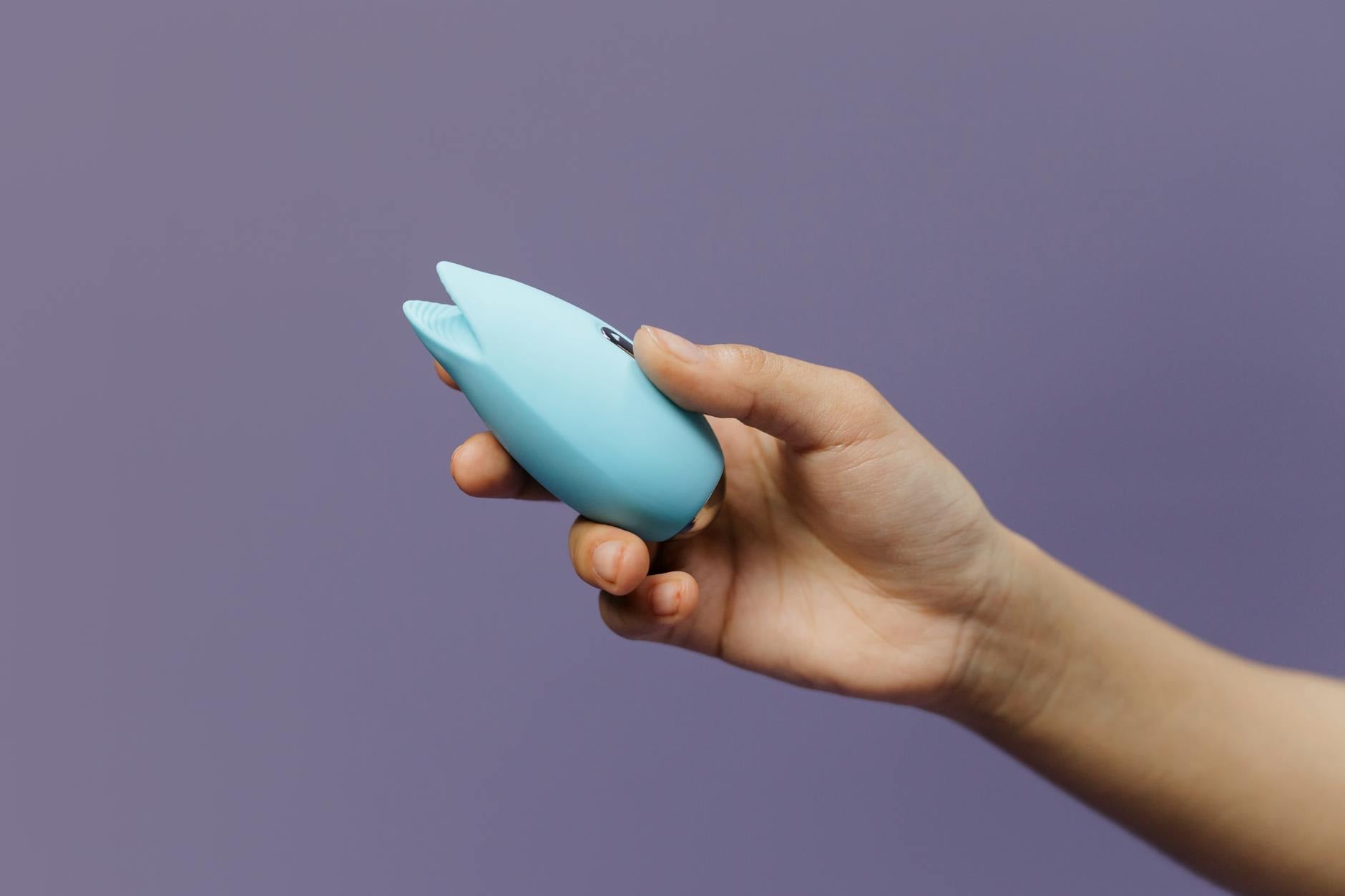
Air-suction vibrators like the Lem work differently. They don't rely on friction alone. Instead, they use gentle pulses of suction that stimulate the nerve endings in a way that's more effective when hormone-related sensitivity is low. You're not grinding your way to pleasure. You're creating a consistent wave of stimulation that your nervous system picks up faster, even when things feel numb.
The other reason lemon clitoral vibrators work well here: you can dial in exactly how much intensity you need without having to hurt yourself. The Lem's pattern range means you can start at level one (which feels like almost nothing) and work up to level four (which feels like intention). There's no leap between "too soft to feel" and "oww." That graduated range is crucial when your sensation is in transition.
The first thing to do: start slow and stay there longer
When you first notice sensation fading on hormonal birth control, the temptation is to crank up the intensity on whatever you were using before. Don't do that yet. Instead, start with the Lem at pattern one and give yourself 15 to 25 minutes. Your arousal is probably slower than it used to be, which means your nerve endings need more time to "wake up."
This isn't laziness or loss of desire. This is biology. Your blood isn't flowing to your genitals as quickly, so it takes longer for sensation to register. Patience here isn't settling. It's actually how you get back to strong orgasms.
Try this sequence: ten minutes of no stimulation at all, just breathing and thinking about whatever gets you interested. Then five minutes with the Lem on pattern one. Then adjust to pattern two or three if it feels right. Some people find that this slow build, paired with the Lem's suction, gets them to climax faster than they expected. Others need the full 25 minutes. Both are normal.
What to do if sensation still feels flat after 20 minutes
If you're 20 minutes in and things still feel pretty numb, you have three options. None of them are failures.
Option one: add a different type of stimulation. If the Lem alone isn't enough, try adding a second vibrator or using your own touch on a different part of your body. Combining stimulation types can help your nervous system register sensation when one type alone is too subtle.
Option two: take a break and try again later. Sometimes your body just isn't cooperative that day, and that's okay. Hormonal birth control means your arousal is more variable now. Today might be a no day. Tomorrow might be a yes day.
Option three: talk to your doctor about changing your birth control method. If sensation loss is severe and it's been three months or longer, the method you're on might not be the right fit. Some people do fine on the pill. Others find that a lower-dose option, or a completely different method like the copper IUD, brings sensation back. This conversation with your doctor is worth having, and it's not giving up.
The mental shift that matters most
One of the biggest changes that happens when you start hormonal birth control is that your desire can feel less automatic. Before birth control, arousal might have rushed in. Now it's more like a prompt that needs a response, not a feeling that comes uninvited.
This is where the lemon vibrators help in a way that goes beyond the physical. Using a tool that's specifically designed for your pleasure sends a message to your brain: I'm choosing this. I'm not waiting for desire to happen to me. I'm creating the conditions for it.
That shift from passive to active is powerful. And it's especially powerful when you're on birth control, because your hormones aren't doing as much of the heavy lifting anymore.
Recovery timeline: when does sensation come back?
For most people, full sensation returns within three to six months of adjusting to a new birth control method. But "adjustment" doesn't mean accepting numbness. It means using strategies like air-suction vibrators to maintain pleasure while your body settles into its new hormone levels.
Some people's sensation never fully returns to what it was before, depending on the method and the individual. If that's you, the goal isn't to chase the past. It's to figure out what new version of pleasure works for you now. Many people find that pleasure on hormonal birth control, once they get used to it, is actually deeper and more intentional than it was before, precisely because it requires more conscious participation.
How to know if it's birth control or something else
Sensation changes can happen for lots of reasons: stress, relationship changes, depression, medication interactions, medical conditions. If you started hormonal birth control at the same time sensation shifted, birth control is probably the culprit. But if sensation faded gradually, or if you were on birth control for a year and then suddenly things changed, something else might be happening.
One way to check: if the sensation loss is hormonal and birth control related, you should feel some improvement within the first two weeks of switching methods or stopping altogether. If you feel nothing, there's probably another cause. Talk to your doctor or a therapist who specializes in sexual health.
Making peace with a different kind of pleasure
Here's what I want you to know: sensation on hormonal birth control is not worse pleasure. It's different pleasure. It requires more intention. It needs more time. It might feel softer or require a different type of touch. But people on hormonal birth control can and do have incredible orgasms. They just usually arrive on a schedule that's a little less spontaneous.
The Lem works with that. Air-suction vibrators are built for sustained, intentional stimulation. They're not trying to jolt you into feeling something. They're inviting your body to participate in something that's already happening.
That's a conversation, not a demand. And sometimes, that's exactly what sensation needs when hormones have shifted it.
People also ask
How long does it take for sensation to come back after stopping hormonal birth control?
For most people, sensitivity begins returning within two to four weeks of stopping, with most of it back by three months. But this varies. If you've been on birth control for years, your baseline sensation might be different now than it was before, not necessarily better or worse, just different. If full sensation hasn't returned after four months, talk to your doctor to rule out other causes like low iron, thyroid issues, or depression.
Can lemon vibrators help with birth control numbness the same way they help with age-related sensitivity changes?
Yes, but the mechanism is slightly different. With age, tissue changes and nerve density shifts. With birth control, the issue is more about neural sensitivity and blood flow. The Lem's air-suction design addresses both, which is why it works well across different types of sensation loss. The key is patience and a willingness to explore what your body responds to now, not trying to recreate what worked before.
Is it normal to lose sensation on all hormonal birth control methods or just some?
Sensation loss is most common with higher-dose methods and with progestin-only methods (the mini-pill, the rod, the shot). Lower-dose combination pills affect fewer people. Non-hormonal methods like copper IUDs don't typically cause sensation changes at all. If you're experiencing loss, switching to a lower-dose method or asking your doctor about non-hormonal options is worth exploring.
Should I use lemon clitoral vibrators on every setting if birth control has dulled my sensitivity?
No. Start at the lowest setting and work your way up over several sessions. Your nervous system is more sensitive than you think, even if it feels numb right now. Jumping straight to the highest intensity can lead to frustration and overstimulation without actually building arousal. The gradual approach, combined with more time and patience, works better than intensity alone.
Does sensation loss from birth control happen immediately or gradually?
It usually happens gradually over the first few months. Most people notice the shift between week four and week 12. Some don't notice until they're a few months in and realize they haven't had a spontaneous orgasm in weeks. This is why it's easy to miss: it's not one dramatic change, it's a slow fade that you only recognize when you look back.
Can you use lemon vibrators alongside other pleasure tools when birth control affects your sensation?
Absolutely. Combining the Lem with manual touch, a second vibrator, or a partner's touch can help your nervous system register sensation faster. When one type of stimulation isn't enough, layering different types of touch often works better. This is especially true if your arousal is slower on hormonal birth control. More input doesn't mean more effort. It just means giving your body multiple ways to wake up.