
The familiar rut nobody talks about
Let's be real. After five years, ten years, or twenty years together, sex often becomes efficient. You know what works. You know how long it takes. You probably know the three positions that get you both there fastest. That efficiency feels safe, but somewhere along the way it stopped feeling like connection.
This isn't a sign your relationship is broken. It's a sign you've optimized pleasure right out of discovery.
Introducing a lemon clitoral vibrator into a long-term partnership isn't about fixing anything. It's about creating permission to be curious about each other again. When you add a new tool like the Lem, you're not replacing what you've been doing. You're expanding the conversation.
Why established couples need new entry points
After years together, your nervous systems know each other. That sounds romantic until you realize it also means you're running the same script every time. Your partner touches you the same way. You respond the same way. The whole thing is predictable, which is comforting right up until it becomes boring.
Here's the thing: boredom in bed doesn't mean you've fallen out of love. It usually means you've stopped being present. A lemon vibrator forces presence because suddenly neither of you knows exactly what's going to happen. The unpredictability, even small unpredictability, wakes up both your bodies.
Research on long-term couples shows that novelty in the bedroom increases relationship satisfaction more than frequency does. One study from 2018 found that couples who introduced new activities reported higher emotional intimacy scores than couples who had sex more often using the same patterns. You're not adding frequency. You're adding aliveness.
The conversation before the toy arrives
This is non-negotiable, and it's where most couples stumble. You can't just pull out a lemon vibrator and hope your partner gets it. That reads as criticism ("our current sex isn't enough") even if you don't mean it that way.
Instead, frame it as curiosity, not correction. "I've been thinking about ways we could reconnect physically. I came across something that looked interesting, and I want to explore it with you. Are you open to trying something new together?"
Notice what's absent: apology, defensiveness, pressure. You're inviting, not accusing.
If your partner says no, that's real information you need to sit with. Don't push. But also ask why. Often the resistance isn't to the toy itself. It's to the feeling of being asked to perform something unfamiliar. That's a different conversation about vulnerability and safety, and it's actually more important than the vibrator.
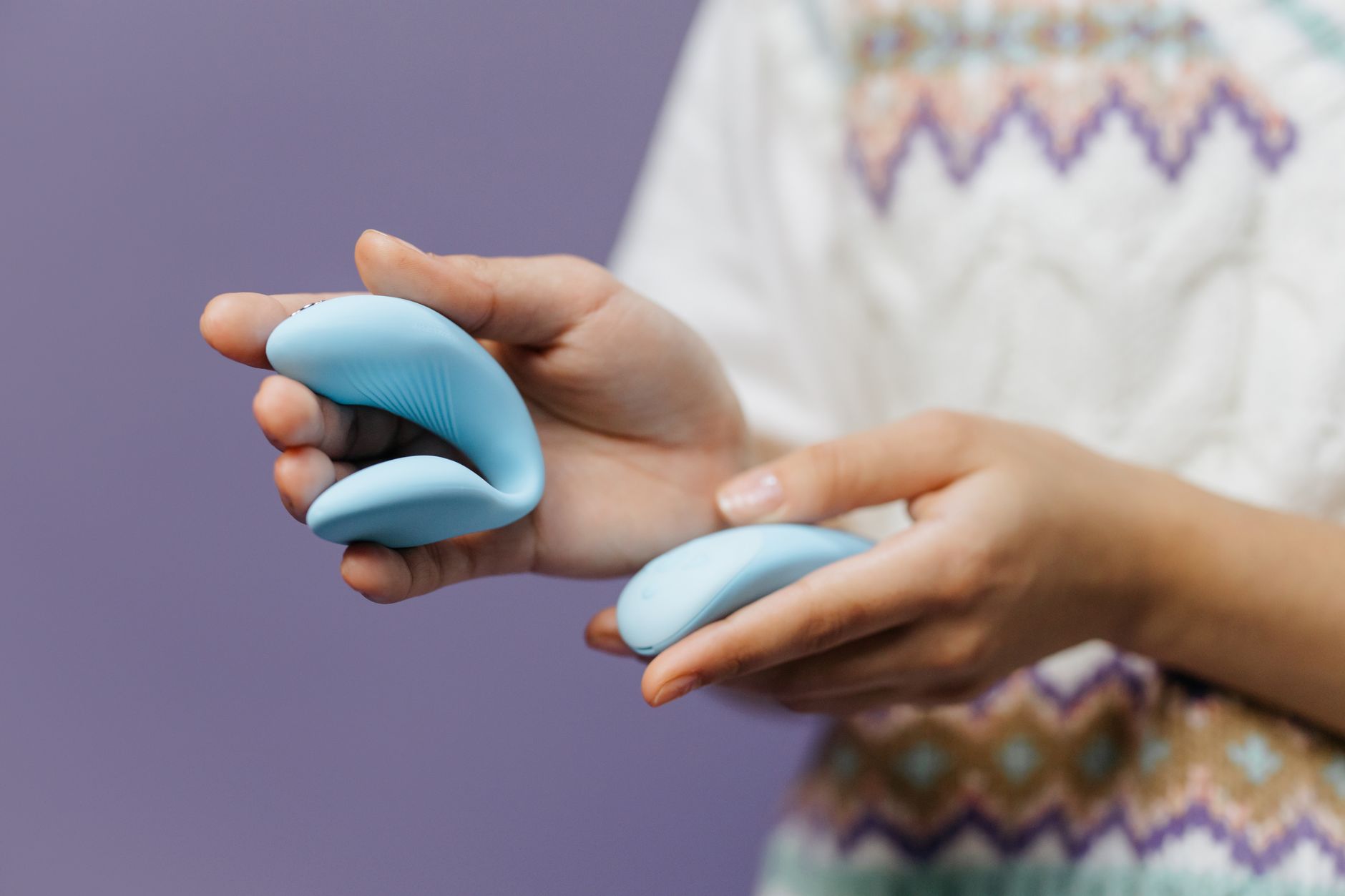
Photo by cottonbro studio on Pexels
How to actually use it together as a couple
First time, slow down. You have nowhere to be. Block off time that feels generous. This isn't about efficiency anymore.
If you're the receiving partner, start with your partner using the Lem on you while you touch them. This keeps the focus distributed. You're receiving AND giving. No one person is being examined under a microscope.
Begin with lower intensity patterns. The Lem has multiple settings, and many long-term partners default to thinking "more intense equals more pleasure." It doesn't. Intensity without presence is just noise. Spend time at patterns 2 and 3. Pay attention to what your body feels like. This might be the first time in months you've actually noticed.
If you're the partner with the toy, pay attention to your partner's body, not the tool. You're reading their breathing, their pelvic tilt, the way their thighs relax or tense. The lemon clitoral vibrator is just a language. Your attention is the conversation.
Many couples find that the first experience isn't the most intense orgasm of their lives. That's actually perfect. If the goal was just bigger pleasure, you could have used the toy alone. The goal is reconnection. Sometimes that means a gentler experience where you're both present, and that beats a solo performance any day.
What changes when you bring toys into established partnerships
The physical changes are obvious. New sensations, potentially faster arousal, different types of orgasms. But the real shift is psychological.
When you invite your partner into something new, you're saying "I still want to discover things with you." That matters more than the actual sensation. You're also admitting that what you've been doing isn't quite meeting your needs. That vulnerability, when done right, deepens trust.
You're also giving yourself and your partner permission to acknowledge that desire exists in your relationship. After years together, lots of couples stop naming desire entirely. It becomes assumed or absent. Pulling out a lemon vibrator is basically saying "I still want you. And I want to want you in new ways."
That changes the energy in your bedroom for weeks afterward.
The practical stuff: lube, communication, and pacing
Use water-based lubricant. Always. Even if natural lubrication is present. The combination of consistent suction (which is how lemon vibrators work) plus lube creates a better experience, and it also signals care.
Keep talking during. Not dirty talk necessarily, unless that's your thing. But "does this feel good," "let me try this," "I want to go slower." That conversation is the intimacy you've been missing.
Don't expect to immediately know the best way to use a clitoral vibrator together. This is a learning phase, and learning together is genuinely more connecting than if you already knew exactly what you were doing. Clumsy is intimate when you're both present for it.
Pace matters. Some couples will benefit from using a lemon sucker once a week for a month, building it into their routine. Others will do it twice and then let it breathe for a while. There's no wrong rhythm. The point is that you're doing it intentionally, not by accident.
Why this works specifically for long-term couples
You already trust each other. That's actually a massive advantage when introducing something new. You don't have the anxiety of a new partner. You're working with existing emotional safety, which means you can focus on physical discovery instead of wondering if the other person thinks you're weird.
You also know each other's bodies well enough to recognize when something is working. A new couple might be too self-conscious to notice. You can actually pay attention.
Most importantly, you have years of history to draw on. This isn't your first uncomfortable conversation. You've navigated other transitions. A lemon clitoral vibrator is just one more chapter in a longer story, and that context makes it feel less risky.
When to get help if reconnection isn't happening
If you've introduced something new and sex still feels distant, that's real information. Sometimes the intimacy issue isn't about technique or tools. It's about resentment, emotional distance, or changes in how you feel about each other.
A couples therapist who specializes in sexuality can help you untangle whether this is a physical disconnection or an emotional one that's showing up in the bedroom. That distinction matters.
Likewise, if one partner feels pressured or uncomfortable even after conversation, that's not something a toy is going to fix. That's a sign that something deeper needs attention. Therapy isn't failure. It's an investment in whether this relationship is worth rebuilding.
The real play here
Honestly, the lemon vibrator isn't the point. It's an excuse. It's permission to stop optimizing and start exploring. After years together, couples need regular reminders that desire is still available, that you can still surprise each other, and that sex is meant to be playful, not just functional.
A well-designed clitoral vibrator like the Lem is just the tool that makes that permission concrete.
People also ask
Should we use a vibrator every time we have sex?
Nope. Using it sometimes keeps it special. If you default to toys every single time, you lose the novelty that made it interesting in the first place. Think of it as part of your rotation, not your baseline.
What if my partner feels insecure about the vibrator?
Insecurity usually isn't about the toy. It's often about worrying that they're not enough, or that introducing a vibrator means their partner is unhappy. Have an explicit conversation about this. "I love sex with you. I want to add something that feels good for both of us." Frame it as expansion, not replacement. And listen to their concern without dismissing it. Feeling heard is half the solution.
Can we use a lemon clitoral vibrator during foreplay, or does it have to lead to penetration?
Yes to both. Use it however feels good. Some couples find that the Lem is the main event. Some use it as part of foreplay. Some use it during penetration. There's no "supposed to." You're in charge of the experience.
How long does it usually take to feel reconnected after introducing a toy?
That varies wildly. Some couples feel it immediately. Others need three or four times before it stops feeling awkward and starts feeling natural. Give yourself at least a month of exploration before deciding whether it's working. Also, "reconnected" doesn't have to mean earth-shattering orgasms. Sometimes it just means you're paying attention to each other again, and that's enough.
Is it normal for sex to feel routine after being together for years?
Completely normal. You've become efficient with each other, which is comforting but also predictable. The good news is that predictability isn't permanent. You can rebuild discovery. It takes intention, but it's absolutely possible.
How do I bring this up without making my partner feel like I'm criticizing what we already do?
Lead with curiosity, not critique. "I've been thinking about ways we could have more fun together" lands very differently from "I'm bored with what we're doing." One is an invitation. One is a complaint. Also, suggest it during a non-sexual moment. Bringing it up right before or right after sex will land wrong. Have the conversation over coffee or while you're doing dishes.
What matters most
After years together, the deepest intimacy comes from willingness to be vulnerable. Suggesting something new, trying it, laughing when it feels awkward, adjusting, trying again. That's the real connection. The lemon vibrator is just the container for that process. Your attention to each other is everything.