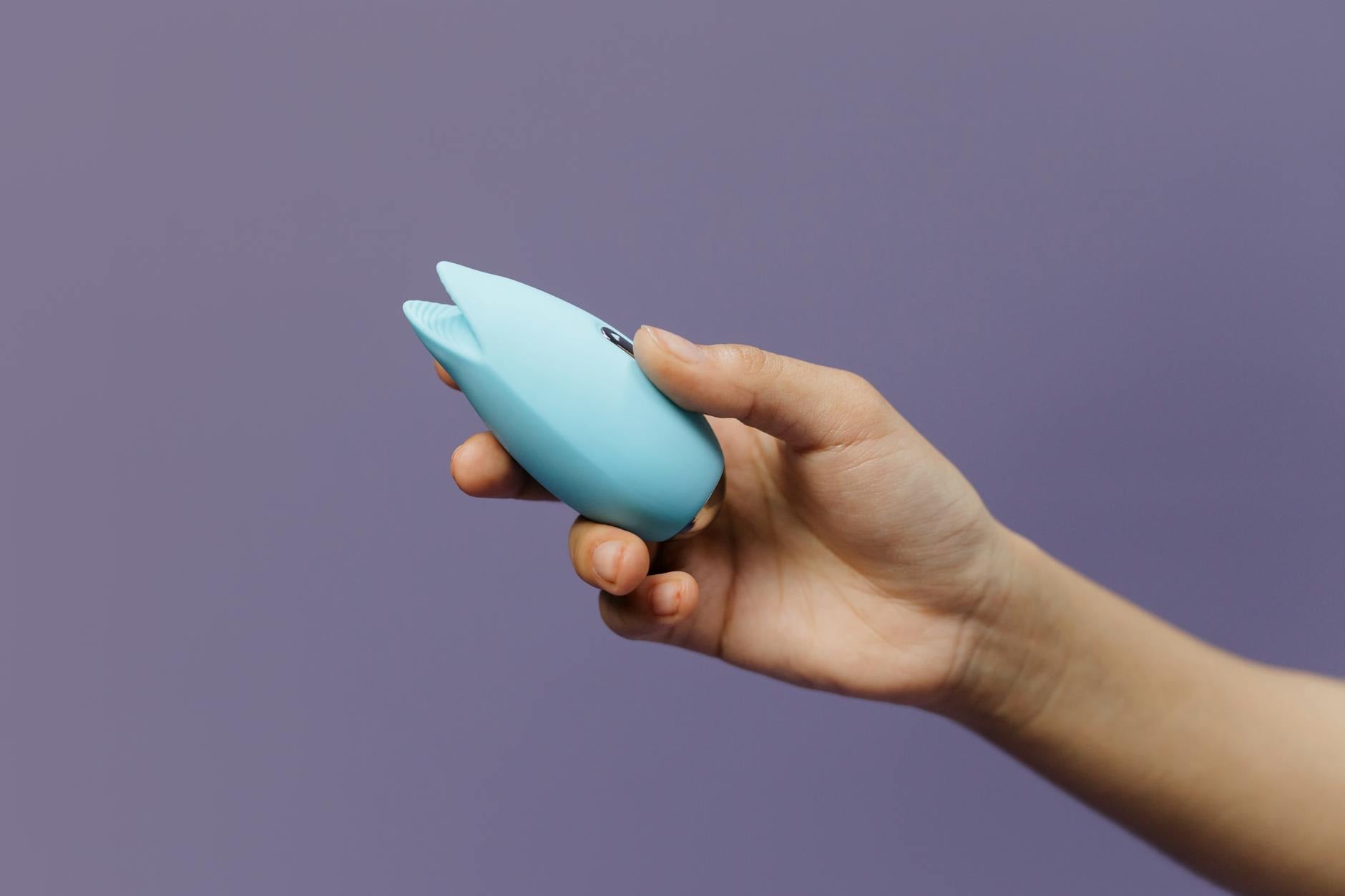
Let's talk about the thing no one mentions
New partner sex is loaded. You're learning their rhythm, they're learning yours, and underneath all that is a low-grade anxiety: what if I'm too sensitive down there, or not sensitive enough. What if I take too long. What if my body doesn't respond the way it did with my ex. Here's the thing that nobody tells you: introducing a lemon vibrator into early partnership isn't about adding novelty. It's about permission.
A clitoral vibrator is a language. It says, "I know what I like." It says, "Let me show you." It says, "This is us, not me versus my body." That shifts everything.
Why new partners are actually the ideal time
You don't have years of unspoken expectations hanging over this. You don't have a "but we always do it this way" conversation waiting to happen. New partnership is a blank page. The lemon vibrators work here because they're neutral territory. They're not "I'm not satisfied with you." They're "Here's what feels incredible, and I want you to be part of it."
I've worked with couples where one partner brought a vibrator to bed in month three, and it completely changed the trajectory. Suddenly, instead of guessing, they were building pleasure together. Instead of performing, they were exploring.
One more thing: when both partners are new to each other, a vibrator removes a ton of the awkwardness. You're not comparing to an ex's experience. You're building your own experience from the ground up.
The conversation before anything else
Do not just introduce a lemon clitoral vibrator to bed without talking about it first. I know that sounds like it kills the mood, but it actually does the opposite. It kills the anxiety.
Start outside the bedroom. Over coffee or in the car. "I've been thinking about exploring with a vibrator. I'd love to try it with you if you're interested." That's it. You're not asking permission. You're inviting collaboration.
What you're listening for in their response is curiosity, not buy-in. They don't need to be wildly enthusiastic. They need to be genuinely open. If someone says, "I'm not sure, but I'm willing to try," that's a green light. If someone says, "I don't know, that feels emasculating," that's valuable information that needs a separate conversation entirely.
The conversation should include these specifics:
- Why you're interested (because it feels good, because you want to share that, because you're curious about your own body)
- What you imagine happening (it's okay if this is vague)
- What you want from them (presence, participation, watching, whatever is true)
- That this is additive, not a replacement
That last one matters. A lot of partners worry that a vibrator means they're not enough. They aren't. You're not. Nobody is "enough" in that sense. Pleasure is collaborative, not competitive.
The first time you bring it into the bedroom
Start with clothes on. Actually, I'm serious. Take your time. The lemon vibrator isn't a shortcut to arousal. It's an element of foreplay that deserves as much attention as kissing does.
Show your partner what it feels like first, with them watching or touching you. This does three things: it removes mystery, it lets them see what turns you on (which is genuinely sexy information to have), and it normalizes it. You're not hiding behind it. You're sharing it.
When you're both ready to escalate, use it as part of your routine, not as the main event. If you normally spend fifteen minutes on foreplay before anything else, the vibrator is part of those fifteen minutes. This isn't "I need this to come." This is "I want to explore this together."
When clitoral stimulation with a lemon vibrator feels good, you might notice your partner relaxes too. That's because you're clearly not performing. You're actually enjoying yourself, and that permission is contagious.
What if they want to use it on you
This is where new partnership gets really good, actually. Let them explore with it first. They'll have no idea what intensity or pattern feels right. You'll guide them. This puts you in the position of expertise (because you are), and it's incredibly hot to be the person teaching your partner what your body wants.
Common beginner moves from partners:
- Pressing way too hard (gentler, always)
- Moving it around too much (hold it steady, let the vibration do the work)
- Assuming one pattern feels good forever (it changes, check in)
- Treating it like a finishing move instead of part of the process (slow down)
Instead of correcting these in real time (which feels awkward), you can guide it: "A little lighter here," or "Stay there for a second," or "Try that lower pattern." This keeps you in conversation mode instead of critique mode.
The psychological shift that happens
When you use a lemon clitoral vibrator with a new partner early on, you're training them to listen to your body. You're also training your nervous system to feel safe being desired in this relationship specifically. That matters because a lot of people come into new partnerships with old wiring about what pleasure is supposed to look like.
A vibrator short-circuits that. It says, "This is what we're doing now, and it's normal." New partners are actually more adaptable to that message than people who've been together for years.
I've noticed that couples who bring this in early rarely have the "we never talk about what we want" conversation later. They've already had it. The vibrator was just the vehicle.
Timing and rhythm with sensation
Don't use the vibrator as a crutch for the hard parts of early partnership sex. What I mean: don't grab the lemon vibrator the moment things slow down. Let some slowness exist. Let the building of arousal take time.
Your nervous system needs time to trust a new partner, and that's not fixable with an air-suction device, no matter how good the lemon vibrators are. Use it when arousal is already present and building. Use it as an accelerant, not a jump-start.
That said, if you're someone who tends to take a while to warm up, and your new partner knows that, a vibrator can actually reduce performance pressure. It buys you the fifteen minutes you need without anyone getting frustrated.
What to watch for (and when to pause)
If either of you is getting quiet or stiff, pause and check in. Not in a "is this okay" way, but in a "what's happening" way. Sometimes it's just focus. Sometimes it's anxiety. Sometimes it's that one person feels left out of the experience.
If a partner keeps redirecting away from the vibrator, that's information. Don't push. Go back to what was working and save the vibrator conversation for outside the bedroom. There might be stuff to work through that has nothing to do with you or the lemon vibrator.
If you find yourself unable to orgasm with a vibrator when your partner is present (even though you can alone), that's also information. It's probably anxiety, not a physical thing. Taking the pressure off helps more than adding intensity does. Try using it while they're present but not focused on you. Sometimes the witness matters more than the participation.
Why lemon vibrators specifically change this dynamic
Air-suction clitoral vibrators like the lemon work differently than traditional vibrators. They're less intense in a raw power way and more subtle in how they build sensation. This is actually ideal for new partnership because it doesn't overwhelm the nervous system, and it leaves more room for your partner's touch. You're not just receiving stimulation. You're receiving it in conversation with another person.
The lemon clitoral vibrator also stays in one place, so your partner can touch you in other ways at the same time. This keeps things connected instead of isolating the vibrator as the main event. That integration is huge for building intimacy with a new partner.
The conversation after
Don't skip this part. Before you both roll over and go to sleep, say something. "That felt good," or "I liked that we tried that," or even "That was awkward, but I'm glad we did it." You don't need a debrief session. You need acknowledgment that you did something intimate together and it mattered.
If something felt off, now is when you mention it. "I felt a little self-conscious," or "I was overthinking it." These aren't complaints. They're information that helps next time.
The couples I work with who integrate vibrators early almost always report that it deepened trust faster. Not because of the vibrator itself, but because they had to communicate clearly to use it. And clear communication is the actual foundation of everything.
People also ask
Will my new partner think I'm using the vibrator because they're not enough?
Only if you haven't told them otherwise. The conversation matters. When you frame it as "I want to explore this with you" instead of "I need this because you can't get me there," the meaning is completely different. Most partners, once they understand it's collaborative, actually think it's hot. You're inviting them into your pleasure, not replacing them.
What if my new partner wants to use a vibrator and I'm nervous about it?
That nervousness is usually about performance anxiety. Your brain is already worried about being enough, and adding a vibrator feels like proof that you're not. But that's not what's happening. A partner who brings this to the conversation early is actually trying to take pressure off both of you. They want to enjoy sex together, not perform for each other. If you can reframe it that way, the nervousness usually settles.
How do I know if I should try lemon clitoral vibrators with someone I've just started dating?
Trust your gut, but know that "just started dating" is actually the easiest time. You haven't built patterns yet. You haven't had the conversation about what you "usually" do. You're writing the script together. If you're interested in exploring with vibrators, earlier is easier than later.
Can I use a vibrator if I'm anxious about sex with a new partner?
Yes, but go slow. A vibrator won't fix anxiety. It might actually amplify it if you're using it to avoid slowing down. What helps anxiety is presence, communication, and time. Use the vibrator as part of a process that's already grounded in those things, not as a way to skip them.
What if we try it and it doesn't feel good?
Then you know. Some people don't like vibrators. Some people need a lot more foreplay first. Some people need a different kind of stimulation. None of that means anything is wrong. It just means you're learning what works for you as a couple. The fact that you tried it is what matters.
Should I be worried if my new partner already has vibrators?
No. They probably have hands too. Having experience with pleasure doesn't mean anything except that they know what they like. That's actually useful information for you.
The truth about early partnership and vibrators is this: you're either going to have a conversation about pleasure, or you're going to perform at each other for six months and hope it works. A lemon clitoral vibrator just makes the conversation easier. It gives you an object to talk about instead of trying to discuss abstract things like sensation and arousal.
Your new partner doesn't need to be perfect. They need to be willing to listen. And if they are, a vibrator becomes one of the best tools for actually building that foundation together.